Prime Minister Manmohan Singh mourned his death in his message to Tendulkar's wife Sunetra.

The Prime Minister's economic panel on Tuesday said it could revise upward the economic growth forecast to 7 per cent from 6.5 per cent for the current fiscal on the back of robust economic growth in the second quarter.

The Prime Minister's Economic Advisory Council Chairman C Rangarajan has said the hike in interest rates will not impact the high economic growth in the face of strong fundamentals.
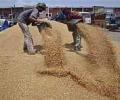
The food ministry has supported the suggestion of Rangarajan panel to allow export of 2 million tons of wheat from government stocks immediately to ease pressure on storages, the Rajya Sabha was informed on Monday.

Finance, oil ministry tussle over exports.

Inflation measured by the Wholesale Price Index had declined to 6.62 per cent in January. It was 7.18 per cent in December and 7.24 per cent in November.

The former Governor of RBI said India would see 'definite signs of recovery' in the second half of 2009-10. On growth forecast, he said this fiscal will see a rate of 6 and 6.5 per cent, but it will be higher next fiscal.
The government should act quickly to raise diesel rates to bring them in line with global prices in order to reduce its subsidy bill, Prime Minister's Economic Advisory Council Chairman C Ranagarajan has said.

On Tuesday, the partially convertible rupee, the worst performing currency among the major global economies, dropped as much as 3.1 percent to 68.12 per dollar.

Rangarajan says there was no need to change the inflation comfort level from four-five per cent.

D Subbarao reiterated concerns over rising gold imports and its pressure on current account deficit.
Growth in the six core industries -- crude oil, petroleum refinery products, coal, electricity, cement and finished steel -- in April-March 2008-09 was 2.7 per cent against 5.9 per cent in the previous fiscal. Crude oil production continued to remain in the negative zone as it dipped by 3.1 per cent in April while it had registered a growth rate of 1 per cent a year ago.
FDI in retail would have a limited impact on small retailers, Chairman of PM's Economic Advisory Council C Rangarajan said.
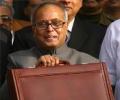
Last year, the Survey suggested a long list of reforms, but most of these found no place in the Budget.

The Prime Minister's Economic Advisory Council (PMEAC) expects the economy to grow by over 7.2 per cent during the current fiscal and exceed 8 per cent in 2010-11, thanks to increased economic activity.
The Indian economy grew at a faster pace of over 8 per cent in two consecutive fiscal before falling to a nine year low of 6.5 per cent in 2011-12.
The rupee has recovered to trade at 63 level after hitting its life-time low of 68.85 towards August-end.

Rangarajan also called for improvement in the country's corporate-bond market saying that this will help even small companies to raise adequate funds.
The main worry is that the inflation rate is expected to remain high at 9 per cent till October, the Prime Minister's Economic Advisory Council said.
Technology can play an important role in almost every sector of the economy in enhancing productivity and production.

The accounting system of the central and state governments may change considerably, with a high-level committee suggesting sweeping changes in how expenditure is classified in Budget documents.
PM's economic advisors have suggested a hike in petrol and diesel prices to tackle the global crude prices.
Retail inflation in February has come down to a 25-month low of 8.1 per cent.

C Rangarajan, former governor of Reserve Bank of India, was speaking on the topic `the growth path and some concernson the way' at a function at Federation of Gujarat Industries on Monday.

Wholesale Price Index for the month ended March moderated to 3-year low of 5.96 per cent against Reserve Bank's projection of 6.8 per cent.

The IIP growth has been revised downwards to 1.14 per cent for January, from the provisional estimates of 6.8 per cent, according to the official data released on Wednesday.
Announcing the decision after the meeting of the Cabinet Committee on Economic Affairs, Finance Minister P Chiadambaram said this is an ad-hoc measure and the recommendation of Commission for Agricultural Costs and Prices has been referred to the Prime Minister's Economic Advisory Council. The CACP had recommended the paddy MSP at Rs 1,000 per quintal for 2008-09 Kharif season.

Prime Minister's Economic Advisory Council Chairman, C Rangarajan, on Wednesday echoed leading personalities saying the deteriorating quality of governance may come in the way of India achieving high growth on a durable basis.
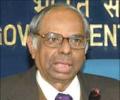
I think the overall growth rate of the economy will be between 5.5-6 per cent, says C Rangarajan.

The government has decided to hold off introducing the production-linked incentive (PLI) scheme for additional sectors until it verifies the efficacy of existing initiatives. Top government officials have received mixed feedback on the scheme, including insights from the Economic Advisory Council to the Prime Minister, people aware of the matter said. "There are no new PLI schemes in the offing.
The panel, headed by former RBI governor C Rangarajan, in its economic outlook for 2007-08 also projected inflation to remain within 4 per cent.
PM's economic advisory council chairman C Rangarajan has asked microfinance institutions (MFIs) to overhaul their "flawed" business model for sustainability.
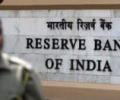
Prime Minister's Economic Advisory Council Chairman C Rangarajan on Tuesday called RBI's policy action a "wise decision". The liquidity easing measures will have an impact on interest rates, he said.

High gold imports had contributed to high CAD which stood at 5.4 per cent in the second half of 2012-13 and was creating pressure on the rupee.
Various government agencies have predicted that the economy would grow at 7 per cent or above while the Prime Minister's Economic Advisory Council is expected to review the economic growth forecast of 8 per cent. The mid-year review of the economy tabled in Parliament on Tuesday said that the country should be prepared for a growth rate of around 7 per cent in 2008-09.
India's projected growth rate may be marginally affected if there\nis a bad monsoon, as it will affect agricultural output, said Suresh Tendulkar,\nchairman of the prime minister's Economic Advisory Council.

Although the government had pegged fiscal deficit for the current financial year at 5.1 per cent of the GDP in the budget, it has revised the target to 5.3 per cent in view of subdued revenue collection and rising fuel and food subsidy bills.
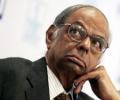
He feels that RBI could be waiting for a period or an opportune movement when there could be sustained reduction.

Are short-term compulsions increasing long-term instability?
